Logo on colored background

Rudram

About the Piece

Rudram unfolds as a visual masterpiece inspired by Sri Rudram, an ethereal representation that delves into the profound realms of cosmic processes.

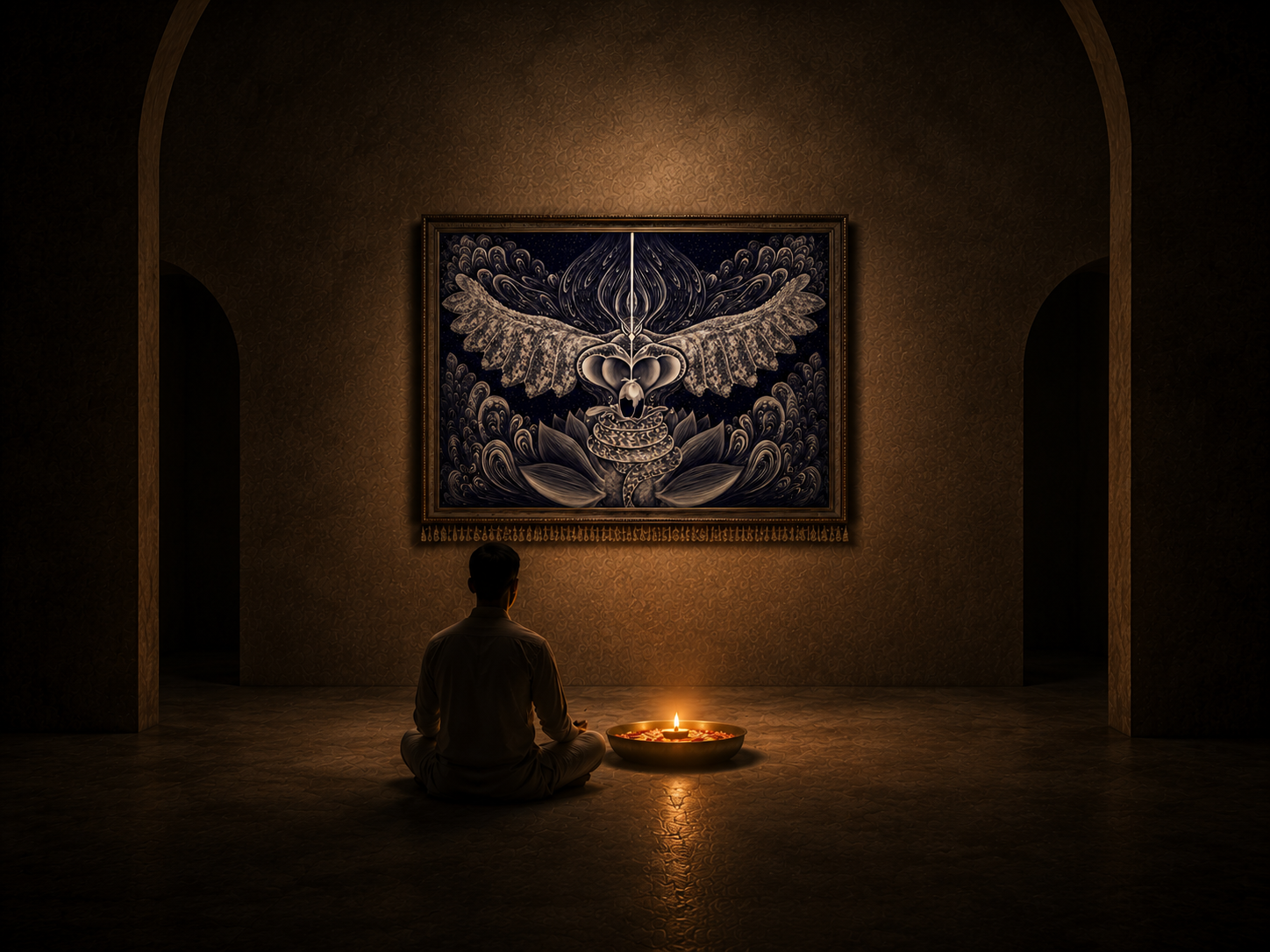
At its heart, the artwork reveals a delicate dance—a lingam cradled within the protective coils of the naga, a dance through the tapestry of time under the majestic wingspan of an eagle, the very embodiment of breath.

A gentle cascade of white descends from above, a metaphorical symphony, embodying both the Sushumna’s serpentine path and the resonant Pranavanaadam.

Nestled within the Kamalam at the base of the body, the lingam serves as the focal point, echoing Rudram’s inaugural roar - a symbolic genesis of creation.

This artistic journey further transcends, capturing the fluidity of consciousness in its ascension, harmonizing with a trill that reverberates through the Sushumna, guided by the rhythmic healing whispers of the breath, from the sacred base to the celestial zenith.

The Genisis

నమః సో మాయ చ రుదా ్ర య చ

నమసా ్త మా  య చారుణాయ చ

నమః శంగాయ చ పశుపతయే చ

నమ ఉగా  య చ భీమాయ చ

నమో అగేవధాయ చ దూరేవధాయ చ

నమో హంతే్ర చ హనీయసే చ

నమో వృేభ్య హరికేశేభ్యః

నమసా ్త రాయ

నమశ్శంభవే చ మయోభవే చ

నమః శంకరాయ చ మయస్కరాయ చ

నమః శివాయ చ శివతరాయ చ

నమసీ ్త రా  య చ కూలా్యయ చ

నమః పారా్యయ చావారా్యయ చ

నమః ప్రతరణాయ చోత ్త రణాయ చ

నమ ఆతారా్యయ చాలాదా్యయ చ

నమః శషాయ చ ఫేనా్యయ చ

నమః సికతా్యయ చ ప్రవా్యయ చ

Note:

These texts are the foundation from which the paintings were born. Spending time with them through contemplation and meditation can help the deeper layers of the artwork reveal themselves.

The paintings are not meant to be understood only visually, but experientially. Like all sacred art, they unfold more completely when approached with inner practice and reflection.

For a fuller understanding of the symbolism and spirit behind the work, please take the time to read, contemplate, and sit with these texts.

“I had a question. It was parked. The painting answered it. The first sound — the first roar — does not come from the throat. It comes from the strumming of a single cord."

Spatial Effect

Rudram is fundamentally an instrument, not a decoration. It does not generate energy — it amplifies what is already present in a space. Like a fan with air, or a flute with breath, it makes felt what is otherwise unfelt. The minimum activation is a lit lamp; that alone is enough for it to begin working.

The two qualities it most reliably brings into a room are intensity and stillness — the same two states that surfaced in the body during its making, alongside heat, pressure, sweat, trembling, and tears. A room holding this painting becomes a room where thinking sharpens and settles at once. Most spaces give you one or the other. This one gives both, simultaneously, without contradiction.

Effect on The Person

The painting maps the rhythm of the universe to the rhythm of the body — the single discovery that broke open during its making. To live with it is to live near a daily reminder that the same gap between inhalation and exhalation in your own breath is the same gap between day and night, between solstices, between yugas, between Brahma's inhalation and exhalation. Parvati's question in the first Shivasutra — how does one who cannot see or hear reach you? — is answered by attention to that gap. Rudram puts that answer on your wall.

01 A deepening of breath-awareness without any instruction needed.

he painting is essentially a visual mantra of Nada, Pranava, and the strumming of the single cord of the spine. Those who sit with it begin to notice their own breath differently — not because they were told to, but because the geometry keeps pointing there.

02 A Grounding in the Subtle

There are two dimensions of attention to detail — attention to the material, which is the Vishnu grandeur of ornamentation, and attention to the subtle, which is the Shiva dispassion of intent. Rudram trains the second kind. For anyone whose work or life requires perceiving things others miss — researchers, writers, builders, healers, decision-makers — this is the painting's most practical gift.

03 Dissolution of Ignorance

When asked what dissolved during the making, the answer arrived in a single word: ignorance. The painting carries that signature, and it transmits it.

04 A motion that reveals itself only to the patient viewer

Lock eyes with the serpent. The serpent and the eagle share the same eyes. Hold the gaze long enough and the painting begins to move in the Z–X axis. The ether around it can begin to move with it. This is not metaphor offered for atmosphere; it is what the painting does for the viewer who actually sits.

What it Does for Specific Kinds of People

01 Anyone in absolute pursuit of practice

If your life is organised around sadhana of any flavour — Bhagalamukhi, Chamundi, Chandi, Naga, or even basic daily practice — Rudram is functionally compatible. Kunkum around the frame and fire underneath, and it becomes a serious working surface.

02 Researchers and people doing deep mental work

Office spaces and researcher's rooms are explicitly ideal placements. The intensity-and-stillness signature is exactly what sustained focus requires.

03 Children

This is the counterintuitive but firm recommendation. Rudram belongs in children's rooms more than anywhere else — for the child to look at every day and wonder what it is. The wondering itself is the practice. This is considered needed, not optional.

04 People wanting to recognise the quality of acceptance

In tumultuous or turbulent phases of life, the painting offers strength to accept rather than fight what is.

05 People wanting to develop humility

A profound sense of humility is one of its core transmissions.

06 Meditation spaces and the hall spaces of homes

These are placements the work was made for — volumes the painting expands into and quietly changes the gravity of.

The Essence in a Nutshell

Rudram gives you, on your wall, the answer to one of the most fundamental questions a human being can carry: where in this body does the rhythm of the universe happen?

The painting maps it — spine, breath, the coiled energy at the base, the single cord being strummed, the bindu where the descent meets the ascent. Living with that map changes howyou breathe, how you sit, how you notice your own body. That is the deepest benefit, and it does not require belief in any of the esoteric layers to begin working. The geometry does the work.

Everything else — the protection, the field strengthening, the deepening of practice, the household effects, the slow reorganisation of the space around it — emerges from that single foundation.

"These works don't generate energy. They amplify what is already there. Like a fan doesn't create air — it makes you feel it. This painting is an instrument."

Logo on colored background

Rudram

About the Piece

Rudram unfolds as a visual masterpiece inspired by Sri Rudram, an ethereal representation that delves into the profound realms of cosmic processes.

At its heart, the artwork reveals a delicate dance—a lingam cradled within the protective coils of the naga, a dance through the tapestry of time under the majestic wingspan of an eagle, the very embodiment of breath.

A gentle cascade of white descends from above, a metaphorical symphony, embodying both the Sushumna’s serpentine path and the resonant Pranavanaadam.

Nestled within the Kamalam at the base of the body, the lingam serves as the focal point, echoing Rudram’s inaugural roar - a symbolic genesis of creation.

This artistic journey further transcends, capturing the fluidity of consciousness in its ascension, harmonizing with a trill that reverberates through the Sushumna, guided by the rhythmic healing whispers of the breath, from the sacred base to the celestial zenith.

The Genisis

నమః సో మాయ చ రుదా ్ర య చ

నమసా ్త మా  య చారుణాయ చ

నమః శంగాయ చ పశుపతయే చ

నమ ఉగా  య చ భీమాయ చ

నమో అగేవధాయ చ దూరేవధాయ చ

నమో హంతే్ర చ హనీయసే చ

నమో వృేభ్య హరికేశేభ్యః

నమసా ్త రాయ

నమశ్శంభవే చ మయోభవే చ

నమః శంకరాయ చ మయస్కరాయ చ

నమః శివాయ చ శివతరాయ చ

నమసీ ్త రా  య చ కూలా్యయ చ

నమః పారా్యయ చావారా్యయ చ

నమః ప్రతరణాయ చోత ్త రణాయ చ

నమ ఆతారా్యయ చాలాదా్యయ చ

నమః శషాయ చ ఫేనా్యయ చ

నమః సికతా్యయ చ ప్రవా్యయ చ

Note:

These texts are the foundation from which the paintings were born. Spending time with them through contemplation and meditation can help the deeper layers of the artwork reveal themselves.

The paintings are not meant to be understood only visually, but experientially. Like all sacred art, they unfold more completely when approached with inner practice and reflection.

For a fuller understanding of the symbolism and spirit behind the work, please take the time to read, contemplate, and sit with these texts.

“I had a question. It was parked. The painting answered it. The first sound — the first roar — does not come from the throat. It comes from the strumming of a single cord."

Spatial Effect

Rudram is fundamentally an instrument, not a decoration. It does not generate energy — it amplifies what is already present in a space. Like a fan with air, or a flute with breath, it makes

felt what is otherwise unfelt. The minimum activation is a lit lamp; that alone is enough for it to begin working.

The two qualities it most reliably brings into a room are intensity and stillness — the same two states that surfaced in the body during its making, alongside heat, pressure, sweat, trembling,

and tears. A room holding this painting becomes a room where thinking sharpens and settles at once. Most spaces give you one or the other. This one gives both, simultaneously, without

contradiction.

Effect on The Person

The painting maps the rhythm of the universe to the rhythm of the body — the single discovery that broke open during its making. To live with it is to live near a daily reminder that the same gap between inhalation and exhalation in your own breath is the same gap between day and night, between solstices, between yugas, between Brahma's inhalation and exhalation. Parvati's question in the first Shivasutra — how does one who cannot see or hear reach you? — is answered by attention to that gap. Rudram puts that answer on your wall.

01 A deepening of breath-awareness without any instruction needed.

he painting is essentially a visual mantra of Nada, Pranava, and the strumming of the single cord of the spine. Those who sit with it begin to notice their own breath differently — not because they were told to, but because the geometry keeps pointing there.

02 A Grounding in the Subtle

There are two dimensions of attention to detail — attention to the material, which is the Vishnu grandeur of ornamentation, and attention to the subtle, which is the Shiva dispassion of intent. Rudram trains the second kind. For anyone whose work or life requires perceiving things others miss — researchers, writers, builders, healers, decision-makers — this is the painting's most practical gift.

03 Dissolution of Ignorance

When asked what dissolved during the making, the answer arrived in a single word: ignorance. The painting carries that signature, and it transmits it.

04 A motion that reveals itself only to the patient viewer

Lock eyes with the serpent. The serpent and the eagle share the same eyes. Hold the gaze long enough and the painting begins to move in the Z–X axis. The ether around it can begin to move with it. This is not metaphor offered for atmosphere; it is what the painting does for the viewer who actually sits.

What it Does for Specific Kinds of People

01 Anyone in absolute pursuit of practice

If your life is organised around sadhana of any flavour — Bhagalamukhi, Chamundi, Chandi, Naga, or even basic daily practice — Rudram is functionally compatible. Kunkum around the frame and fire underneath, and it becomes a serious working surface.

02 Researchers and people doing deep mental work

Office spaces and researcher's rooms are explicitly ideal placements. The intensity-and-stillness signature is exactly what sustained focus requires.

03 Children

This is the counterintuitive but firm recommendation. Rudram belongs in children's rooms more than anywhere else — for the child to look at every day and wonder what it is. The wondering itself is the practice. This is considered needed, not optional.

04 People wanting to recognise the quality of acceptance

In tumultuous or turbulent phases of life, the painting offers strength to accept rather than fight what is.

05 People wanting to develop humility

A profound sense of humility is one of its core transmissions.

06 Meditation spaces and the hall spaces of homes

These are placements the work was made for — volumes the painting expands into and quietly changes the gravity of.

The Essence in a Nutshell

Rudram gives you, on your wall, the answer to one of the most fundamental questions a human being can carry: where in this body does the rhythm of the universe happen?

The painting maps it — spine, breath, the coiled energy at the base, the single cord being strummed, the bindu where the descent meets the ascent. Living with that map changes howyou breathe, how you sit, how you notice your own body. That is the deepest benefit, and it does not require belief in any of the esoteric layers to begin working. The geometry does the work.

Everything else — the protection, the field strengthening, the deepening of practice, the household effects, the slow reorganisation of the space around it — emerges from that single foundation.

"These works don't generate energy. They amplify what is already there. Like a fan doesn't create air — it makes you feel it. This painting is an instrument."

Logo on colored background

Rudram

About the Piece

Rudram unfolds as a visual masterpiece inspired by Sri Rudram, an ethereal representation that delves into the profound realms of cosmic processes.

At its heart, the artwork reveals a delicate dance—a lingam cradled within the protective coils of the naga, a dance through the tapestry of time under the majestic wingspan of an eagle, the very embodiment of breath.

A gentle cascade of white descends from above, a metaphorical symphony, embodying both the Sushumna’s serpentine path and the resonant Pranavanaadam.

Nestled within the Kamalam at the base of the body, the lingam serves as the focal point, echoing Rudram’s inaugural roar - a symbolic genesis of creation.

This artistic journey further transcends, capturing the fluidity of consciousness in its ascension, harmonizing with a trill that reverberates through the Sushumna, guided by the rhythmic healing whispers of the breath, from the sacred base to the celestial zenith.

The Genisis

నమః సో మాయ చ రుదా ్ర య చ

నమసా ్త మా  య చారుణాయ చ

నమః శంగాయ చ పశుపతయే చ

నమ ఉగా  య చ భీమాయ చ

నమో అగేవధాయ చ దూరేవధాయ చ

నమో హంతే్ర చ హనీయసే చ

నమో వృేభ్య హరికేశేభ్యః

నమసా ్త రాయ

నమశ్శంభవే చ మయోభవే చ

నమః శంకరాయ చ మయస్కరాయ చ

నమః శివాయ చ శివతరాయ చ

నమసీ ్త రా  య చ కూలా్యయ చ

నమః పారా్యయ చావారా్యయ చ

నమః ప్రతరణాయ చోత ్త రణాయ చ

నమ ఆతారా్యయ చాలాదా్యయ చ

నమః శషాయ చ ఫేనా్యయ చ

నమః సికతా్యయ చ ప్రవా్యయ చ

Note:

These texts are the foundation from which the paintings were born. Spending time with them through contemplation and meditation can help the deeper layers of the artwork reveal themselves.

The paintings are not meant to be understood only visually, but experientially. Like all sacred art, they unfold more completely when approached with inner practice and reflection.

For a fuller understanding of the symbolism and spirit behind the work, please take the time to read, contemplate, and sit with these texts.

“I had a question. It was parked. The painting answered it. The first sound — the first roar — does not come from the throat. It comes from the strumming of a single cord."

Spatial Effect

Rudram is fundamentally an instrument, not a decoration. It does not generate energy — it amplifies what is already present in a space. Like a fan with air, or a flute with breath, it makes

felt what is otherwise unfelt. The minimum activation is a lit lamp; that alone is enough for it to begin working.

The two qualities it most reliably brings into a room are intensity and stillness — the same two states that surfaced in the body during its making, alongside heat, pressure, sweat, trembling,

and tears. A room holding this painting becomes a room where thinking sharpens and settles at once. Most spaces give you one or the other. This one gives both, simultaneously, without

contradiction.

Effect on The Person

The painting maps the rhythm of the universe to the rhythm of the body — the single discovery that broke open during its making. To live with it is to live near a daily reminder that the same gap between inhalation and exhalation in your own breath is the same gap between day and night, between solstices, between yugas, between Brahma's inhalation and exhalation. Parvati's question in the first Shivasutra — how does one who cannot see or hear reach you? — is answered by attention to that gap. Rudram puts that answer on your wall.

01 A deepening of breath-awareness without any instruction needed.

he painting is essentially a visual mantra of Nada, Pranava, and the strumming of the single cord of the spine. Those who sit with it begin to notice their own breath differently — not because they were told to, but because the geometry keeps pointing there.

02 A Grounding in the Subtle

There are two dimensions of attention to detail — attention to the material, which is the Vishnu grandeur of ornamentation, and attention to the subtle, which is the Shiva dispassion of intent. Rudram trains the second kind. For anyone whose work or life requires perceiving things others miss — researchers, writers, builders, healers, decision-makers — this is the painting's most practical gift.

03 Dissolution of Ignorance

When asked what dissolved during the making, the answer arrived in a single word: ignorance. The painting carries that signature, and it transmits it.

04 A motion that reveals itself only to the patient viewer

Lock eyes with the serpent. The serpent and the eagle share the same eyes. Hold the gaze long enough and the painting begins to move in the Z–X axis. The ether around it can begin to move with it. This is not metaphor offered for atmosphere; it is what the painting does for the viewer who actually sits.

What it Does for Specific Kinds of People

01 Anyone in absolute pursuit of practice

If your life is organised around sadhana of any flavour — Bhagalamukhi, Chamundi, Chandi, Naga, or even basic daily practice — Rudram is functionally compatible. Kunkum around the frame and fire underneath, and it becomes a serious working surface.

02 Researchers and people doing deep mental work

Office spaces and researcher's rooms are explicitly ideal placements. The intensity-and-stillness signature is exactly what sustained focus requires.

03 Children

This is the counterintuitive but firm recommendation. Rudram belongs in children's rooms more than anywhere else — for the child to look at every day and wonder what it is. The wondering itself is the practice. This is considered needed, not optional.

04 People wanting to recognise the quality of acceptance

In tumultuous or turbulent phases of life, the painting offers strength to accept rather than fight what is.

05 People wanting to develop humility

A profound sense of humility is one of its core transmissions.

04 Meditation spaces and the hall spaces of homes

These are placements the work was made for — volumes the painting expands into and quietly changes the gravity of.

The Essence in a Nutshell

Rudram gives you, on your wall, the answer to one of the most fundamental questions a human being can carry: where in this body does the rhythm of the universe happen?

The painting maps it — spine, breath, the coiled energy at the base, the single cord being strummed, the bindu where the descent meets the ascent. Living with that map changes howyou breathe, how you sit, how you notice your own body. That is the deepest benefit, and it does not require belief in any of the esoteric layers to begin working. The geometry does the work.

Everything else — the protection, the field strengthening, the deepening of practice, the household effects, the slow reorganisation of the space around it — emerges from that single foundation.

"These works don't generate energy. They amplify what is already there. Like a fan doesn't create air — it makes you feel it. This painting is an instrument."