
Logo on colored background

Series 2

Series 2 is a body of three paintings — Rudram, Tirumala, and Pothana — created as a single arc of work, each piece a distinct doorway into the same house.

That house is the human body. And inside it, the rhythm of the universe itself.

Explore the Series
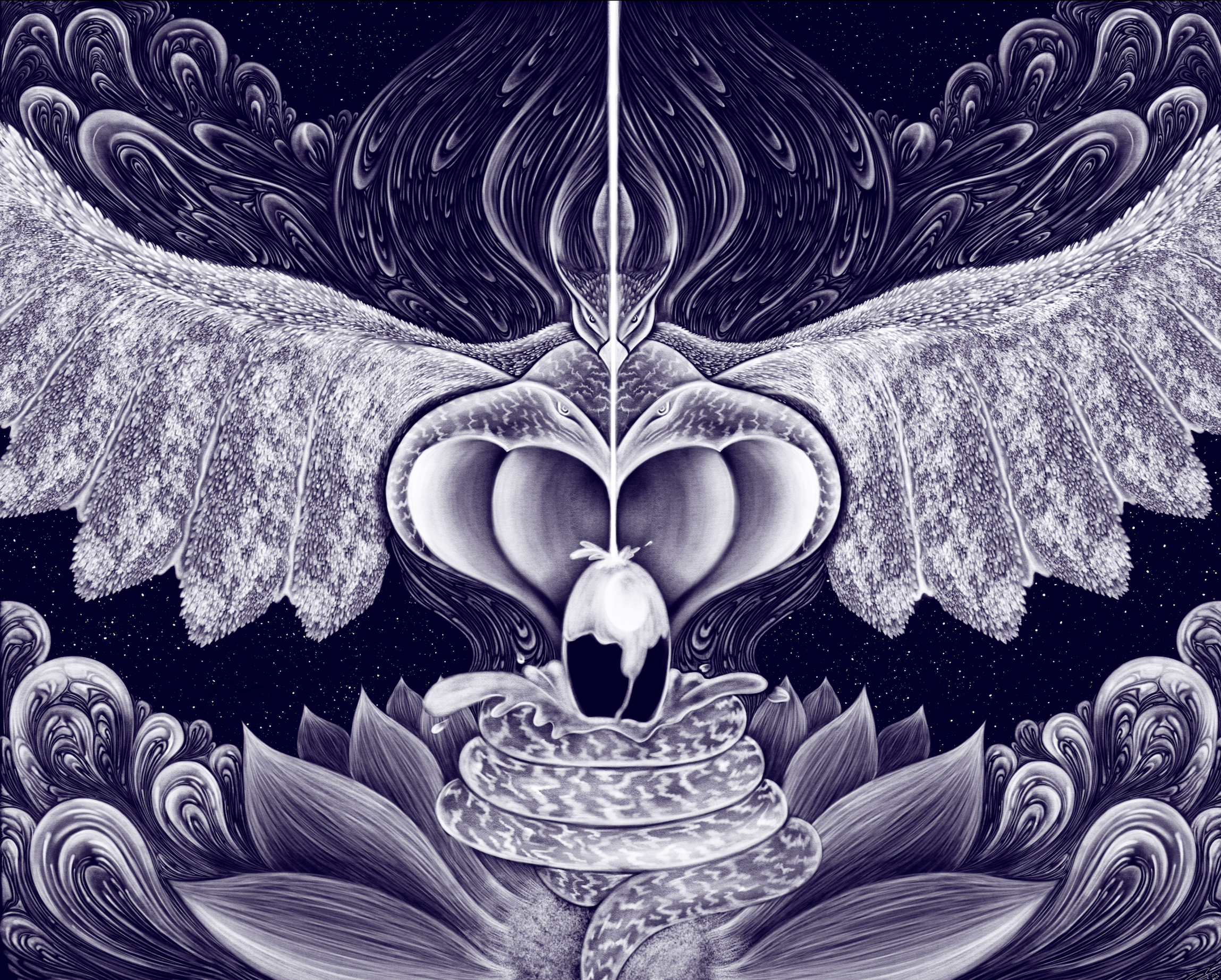
01 Rudram
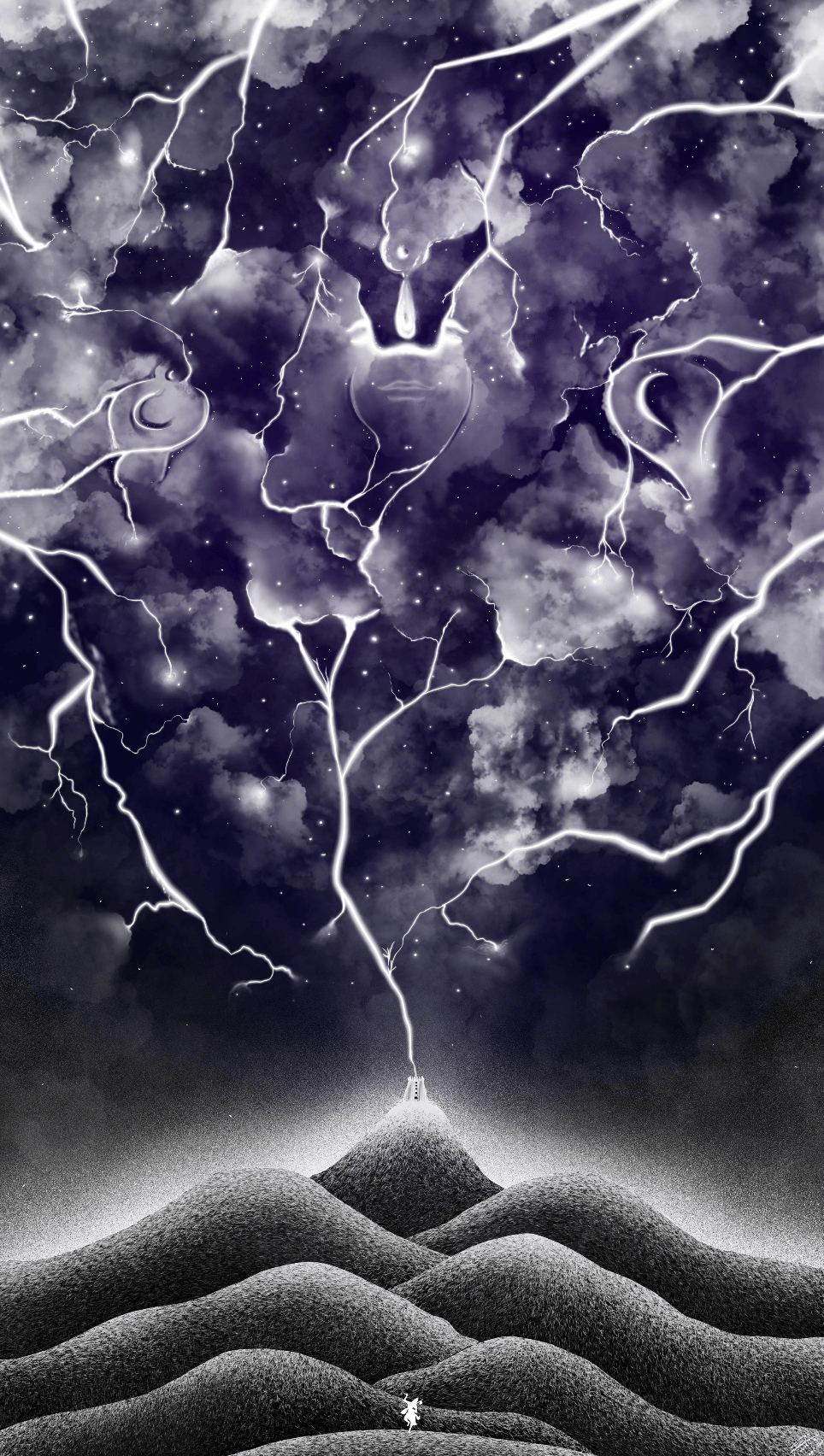
02 Tirumala
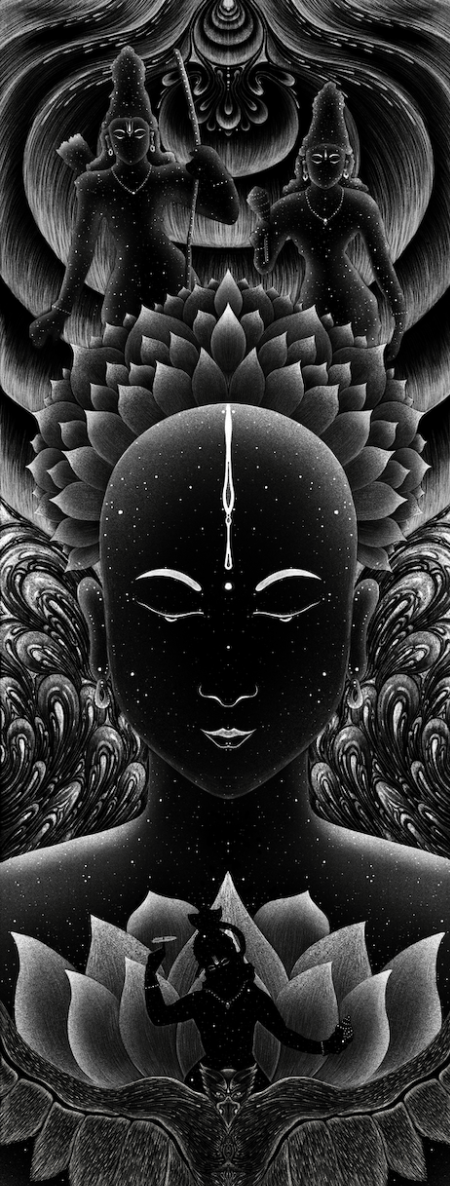
03 Pothana

What the Series Is

These three paintings are not depictions of God in the calendar sense. They do not draw the Lord directly. They draw the conditions under which the Lord is recognised — the strumming of the breath through the spine, the lightning splitting open a rain-filled cloud, the lotus offered from a pool of blood. Each painting takes one fundamental movement of consciousness and renders it visible.

But these works are not aesthetic objects alone. Each painting is built on the science of yantra - sacred symbols, geometric systems, symmetry patterns, and mandala structures embedded into the composition with deliberate intent. When the right orientation is given to the painting, and the right intent is brought into the room, these geometries do not stay decorative.

They begin to function. The painting becomes a working machine — a yantra in painted form — quietly performing the work it was built to do.

Why These Three?

How does it work?

The unifying question beneath the series is quiet, almost unconscious: is there more? Not asked philosophically. Not asked as an intellectual exercise. Asked the way the universe itself asks — through the rules of the game, through the unfolding fabric, through the patient discovery of what was already there.

The three paintings emerged not from a designed plan but from a sustained practice — years of music, years of art, years of inner work — and each arrived when its time came.

What connects them most visibly is their monochrome. All three are pitch black, deliberately. This is not a stylistic preference. It is a doctrine, and it is a function. Most of reality — nearly three-quarters of it — is not visible to the eye. Colour anchors the viewer in the material.

Black strips that anchor away so the intangible can come forward and be engaged with. The black serves another, equally important purpose. It absorbs. The paintings, by being black and white, continuously draw in and dissolve the negative systems around them — the dishti,the evil eye, the heaviness that collects in lived-in spaces. Each painting, by its very nature, functions as a quiet shield.

The geometries within do the work of amplification; the black field does the work of absorption. Together, they protect the room while also enlivening it. This is the deeper architecture of the series. The paintings are not only beautiful. They are functional. They are aesthetic and operational at once.

What the Series Asks of the Viewer

Time. Silence. The right intent. That is all.

These paintings do not perform for the casual eye. They wait. Sit with them, in quiet, with a flame/light nearby, and they will speak.

People do not lack answers — they lack the ability to derive answers. Watch ants and learn systems. Watch water and learn

flexibility. The same applies here. The science of symbolism is embedded into the geometry of each painting, and in the act of sitting and wondering why two things are the way they are, the mind makes space for something to arrive. That space is the

entire point.

The intent the viewer brings is the activating factor. With the right orientation, the right placement, and a quiet willingness to let the painting do its work, the geometries begin to function in full. The sacred symbols, the mandala structures, the figurative forms — all of them come alive when intent meets them.

Without intent, the painting is still beautiful. With intent, it becomes a working possibility.

What the Series Carries - Life.

These three paintings, taken together, hold what could be called the architecture of an awakened life — the breath that animates the body, the recognition of the divine in nature, the surrender that opens onto grace. They are not religious objects in the narrow sense. They belong to anyone with a body, anyone who breathes, anyone who has ever stood under a sky and wondered if there was more.

They are functional objects as much as they are artistic ones. They use sacred geometry, sacred symbols, and mandala patterns to bring grace, protection, and abundance into the spaces they inhabit. They absorb dishti and the negative energies that gather in any home or workspace. They amplify the intent of the people who live with them. And they do all of this while remaining aesthetically whole — beautiful to look

at, even before any of the deeper functions are understood.

They are, finally, an offering — milestones on a path that was discovered rather than invented, placed on the wall so that others can find their own way to the same recognitions. Each painting is a key. The doors they open are already there, waiting.

The series only points to them — and protects, amplifies, and holds the room in which the doors begin to open.

Logo on colored background

Series 2

Series 2 is a body of three paintings — Rudram, Tirumala, and Pothana — created as a single arc of work, each piece a distinct doorway into the same house.

That house is the human body. And inside it, the rhythm of the universe itself.

Explore the Series

01 The Process

02 Tirumala

03 Pothana

What the Series Is

These three paintings are not depictions of God in the calendar sense. They do not draw the Lord directly. They draw the conditions under which the Lord is recognised — the strumming of the breath through the spine, the lightning splitting open a rain-filled cloud, the lotus offered from a pool of blood. Each painting takes one fundamental movement of consciousness and renders it visible.

But these works are not aesthetic objects alone. Each painting is built on the science of yantra - sacred symbols, geometric systems, symmetry patterns, and mandala structures embedded into the composition with deliberate intent. When the right orientation is given to the painting, and the right intent is brought into the room, these geometries do not stay decorative.

They begin to function. The painting becomes a working machine — a yantra in painted form —

quietly performing the work it was built to do.

Why These Three?

How does it work?

The unifying question beneath the series is quiet, almost unconscious: is there more? Not asked philosophically. Not asked as an intellectual exercise. Asked the way the universe

itself asks — through the rules of the game, through the unfolding fabric, through the patient discovery of what was already there.

The three paintings emerged not from a designed plan but

from a sustained practice — years of music, years of art, years of inner work — and each arrived when its time came.

What connects them most visibly is their monochrome. All three are pitch black, deliberately. This is not a stylistic preference. It is a doctrine, and it is a function. Most of reality — nearly

three-quarters of it — is not visible to the eye. Colour anchors the viewer in the material.

Black strips that anchor away so the intangible can come forward and be engaged with. The black serves another, equally important purpose. It absorbs. The paintings, by being black and white, continuously draw in and dissolve the negative systems around them — the dishti,the evil eye, the heaviness that collects in lived-in spaces. Each painting, by its very nature, functions as a quiet shield.

The geometries within do the work of amplification; the black field does the work of absorption. Together, they protect the room while also enlivening it. This is the deeper architecture of the series. The paintings are not only beautiful. They are functional. They are aesthetic and operational at once.

What the Series Asks of the Viewer

Time. Silence. The right intent. That is all.

These paintings do not perform for the casual eye. They wait. Sit with them, in quiet, with a flame/light nearby, and they will speak.

People do not lack answers — they lack the ability to derive answers. Watch ants and learn systems. Watch water and learn

flexibility. The same applies here. The science of symbolism is embedded into the geometry of each painting, and in the act of sitting and wondering why two things are the way they are, the mind makes space for something to arrive. That space is the

entire point.

The intent the viewer brings is the activating factor. With the right orientation, the right placement, and a quiet willingness to let the painting do its work, the geometries begin to function in full. The sacred symbols, the mandala structures, the figurative forms — all of them come alive when intent meets them.

Without intent, the painting is still beautiful. With intent, it becomes a working possibility.

What the Series Carries - Life.

These three paintings, taken together, hold what could be called the architecture of an awakened life — the breath that animates the body, the recognition of the divine in nature, the surrender that opens onto grace. They are not religious objects in the narrow sense. They belong to anyone with a body, anyone who breathes, anyone who has ever stood under a sky and wondered if there was more.

They are functional objects as much as they are artistic ones. They use sacred geometry, sacred symbols, and mandala patterns to bring grace, protection, and abundance into the spaces they inhabit. They absorb dishti and the negative energies that gather in any home or workspace. They amplify the intent of the people who live with them. And they do all of this while remaining aesthetically whole — beautiful to look

at, even before any of the deeper functions are understood.

They are, finally, an offering — milestones on a path that was discovered rather than invented, placed on the wall so that others can find their own way to the same recognitions. Each painting is a key. The doors they open are already there, waiting.

The series only points to them — and protects, amplifies, and holds the room in which the doors begin to open.

Logo on colored background

Series 2

Series 2 is a body of three paintings — Rudram, Tirumala, and Pothana — created as a single arc of work, each piece a distinct doorway into the same house.

That house is the human body. And inside it, the rhythm of the universe itself.

Explore the Series

01 Rudram

02 Tirumala

03 Pothana

What the Series Is

These three paintings are not depictions of God in the calendar sense. They do not draw the Lord directly. They draw the conditions under which the Lord is recognised — the strumming of the breath through the spine, the lightning splitting open a rain-filled cloud, the lotus offered from a pool of blood. Each painting takes one fundamental movement of consciousness and renders it visible.

But these works are not aesthetic objects alone. Each painting is built on the science of yantra - sacred symbols, geometric systems, symmetry patterns, and mandala structures embedded into the composition with deliberate intent. When the right orientation is given to the painting, and the right intent is brought into the room, these geometries do not stay decorative.

They begin to function. The painting becomes a working machine — a yantra in painted form —

quietly performing the work it was built to do.

Why These Three?

How does it work?

The unifying question beneath the series is quiet, almost unconscious: is there more? Not asked philosophically. Not asked as an intellectual exercise. Asked the way the universe

itself asks — through the rules of the game, through the unfolding fabric, through the patient discovery of what was already there.

The three paintings emerged not from a designed plan but

from a sustained practice — years of music, years of art, years of inner work — and each arrived when its time came.

What connects them most visibly is their monochrome. All three are pitch black, deliberately. This is not a stylistic preference. It is a doctrine, and it is a function. Most of reality — nearly

three-quarters of it — is not visible to the eye. Colour anchors the viewer in the material.

Black strips that anchor away so the intangible can come forward and be engaged with. The black serves another, equally important purpose. It absorbs. The paintings, by being black and white, continuously draw in and dissolve the negative systems around them — the dishti,the evil eye, the heaviness that collects in lived-in spaces. Each painting, by its very nature, functions as a quiet shield.

The geometries within do the work of amplification; the black field does the work of absorption. Together, they protect the room while also enlivening it. This is the deeper architecture of the series. The paintings are not only beautiful. They are functional. They are aesthetic and operational at once.

What the Series Asks of the Viewer

Time. Silence. The right intent. That is all.

These paintings do not perform for the casual eye. They wait. Sit with them, in quiet, with a flame/light nearby, and they will speak.

People do not lack answers — they lack the ability to derive answers. Watch ants and learn systems. Watch water and learn

flexibility. The same applies here. The science of symbolism is embedded into the geometry of each painting, and in the act of sitting and wondering why two things are the way they are, the mind makes space for something to arrive. That space is the

entire point.

The intent the viewer brings is the activating factor. With the right orientation, the right placement, and a quiet willingness to let the painting do its work, the geometries begin to function in full. The sacred symbols, the mandala structures, the figurative forms — all of them come alive when intent meets them.

Without intent, the painting is still beautiful. With intent, it becomes a working possibility.

What the Series Carries - Life.

These three paintings, taken together, hold what could be called the architecture of an awakened life — the breath that animates the body, the recognition of the divine in nature, the surrender that opens onto grace. They are not religious objects in the narrow sense. They belong to anyone with a body, anyone who breathes, anyone who has ever stood under a sky and wondered if there was more.

They are functional objects as much as they are artistic ones. They use sacred geometry, sacred symbols, and mandala patterns to bring grace, protection, and abundance into the spaces they inhabit. They absorb dishti and the negative energies that gather in any home or workspace. They amplify the intent of the people who live with them. And they do all of this while remaining aesthetically whole — beautiful to look

at, even before any of the deeper functions are understood.

They are, finally, an offering — milestones on a path that was discovered rather than invented, placed on the wall so that others can find their own way to the same recognitions. Each painting is a key. The doors they open are already there, waiting.

The series only points to them — and protects, amplifies, and holds the room in which the doors begin to open.